
De Dankbaarheid: coin for the ferryman.


Even before I knew the 128 year old traditional Dutch sailing barge or tjalk, would be my brief home, there was one boat which caught my eye along the canal in the crowded small boat harbour where I was accommodated for all but one night of my sojourn in the Netherlands.

De Dankbaarheid (trans: (the) Gratitude) exhudes what Oceanic (Polynesian) cultures call mana, an ineffable quality or supernatural force, (power/energy/vitality) that permeates the universe.

Anyone or anything can have mana. (Similarly anyone or anything can lack mana.) Scholars have pointed to mana as being the source or origin of religions or belief systems.
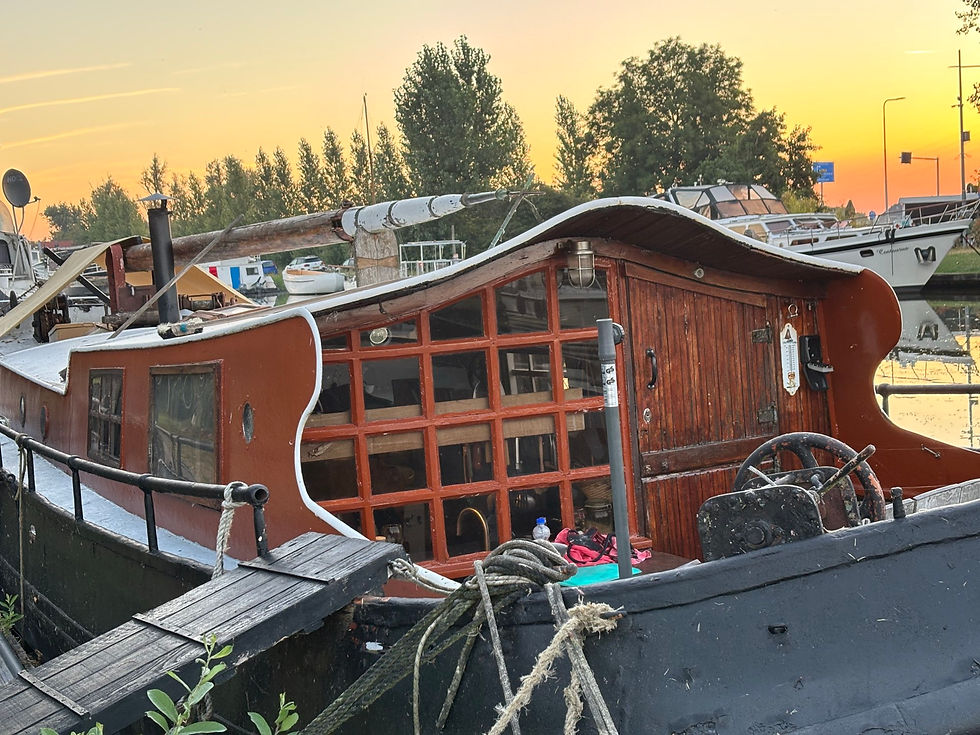
Gently weathered curves and a lethal-when-wet gangplank beckon one closer.

De Dankbaarheid is a wonderful example of why the tjalk , the traditional flat bottomed Dutch sailing barge, is so popular for liveaboard conversions.

The interiors of these vessels, made for carrying cargo around the shallow Zuiderzee and inland waterways, are spacious.

The conversion on DeDankbaarheid is skillful, and has been beautifully executed, retaining many details and the ambiance of the original vessel, while simultaneously creating a unique, convenient and comfortable living space. The galley (kitchen) is particularly well appointed with everything a cook could want and then some.
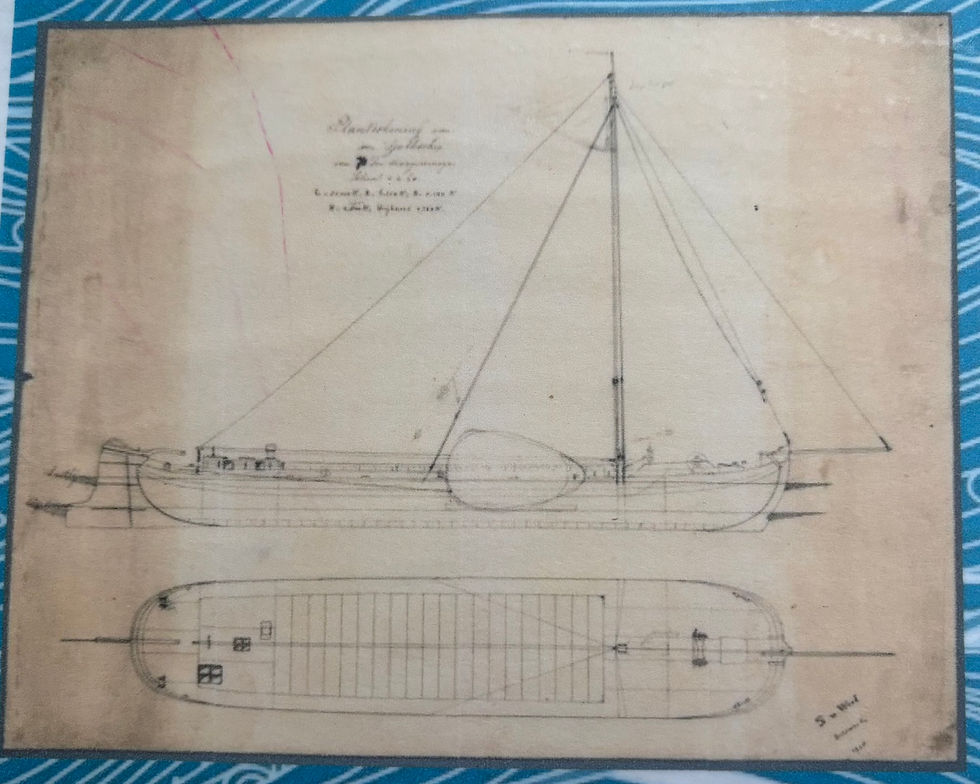
Touches added by other owners or historical records are everywhere.

Though it seems the boat was built in 1898, it was registered to this Arnhem freight company in 1923.

There is no lack for creature comforts. There were several choices of places to sleep. I chose the daybed. Of course. A comfort level with the confinement of sleeping in a box, as the other berths in the front bowels of the boat offered, (look to the back of above image) is perhaps an acquired taste.

There was ample hot and cold water for finding one’s aquatic bliss in the clawfoot soaking tub, though I did need help finding out how to let the water out after my first bath. Cultural dysphoria strikes again or just me being muddle headed.

It was height of summer, so no need of a fire, but I could imagine overwintering on this boat, hatches battened down against the chilly damp outside, interior toasty warm thanks to this wood burning stove. Tucked just behind the stove, incidentally, one finds the the onboard toilet.

There’s a retreat or holiday cottage feel to the space with its eclectic and casually layered clutter/decor.

Obviously several past sojourners have found the typewriter and felt the need to leave footprints in the sand.

I felt like I was home. A familiarity. I have been here before. I know the space the way I know the shala’s shape. There was no fumbling and stumbling when getting up in the dark night. I, who doesn’t sleep, slept at last, deeply, soundly, embraced by this vessel, the slap of waves against that curvaceous bow a soothing, comforting lullaby.

De Dankbaarheid is the perfect place to overwinter an insomniac word wrangler.

Moored, as it is, across the canal from some shiny modern investment pieces: La Vie (Life) and Esperanza (Hope). Without mana it’s all just noise: hollow cymbals, empty vessels.

Alongside more comfortable and homely neighbours.

I know which side of the canal I choose and now I also know how to operate the little pontoon when I need to cross over.

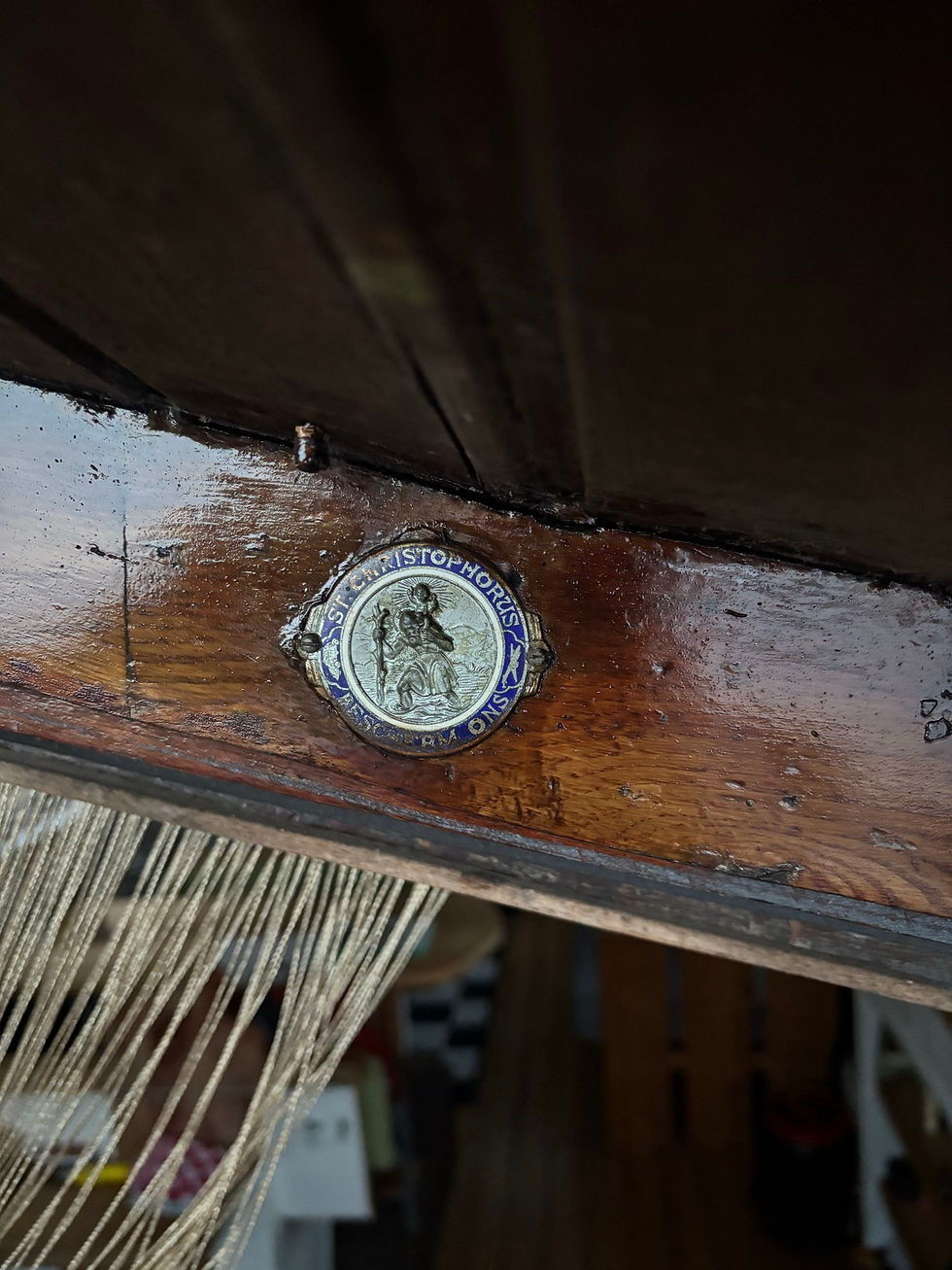
The ancestors put their seal on it. Rainbows attended my leaving.
What was I saying just the other day about Jung and the symbolic life? It’s in this post
And rainbows? A year ago I wrote this in a post here
…In this one wild and precious life, I’ve been lucky enough to encounter a number of traditional cultures. In Zulu, native Hawaiian and Dine stories, the rainbow, or a deity who takes the form of a rainbow, serves to connect humans with divinity or their ancestral spirits (which might be the same thing)….
Read more about rainbows in culture here


Comments