
Centering ancestral voices
- kaydee777
- 4 hours ago
- 5 min read

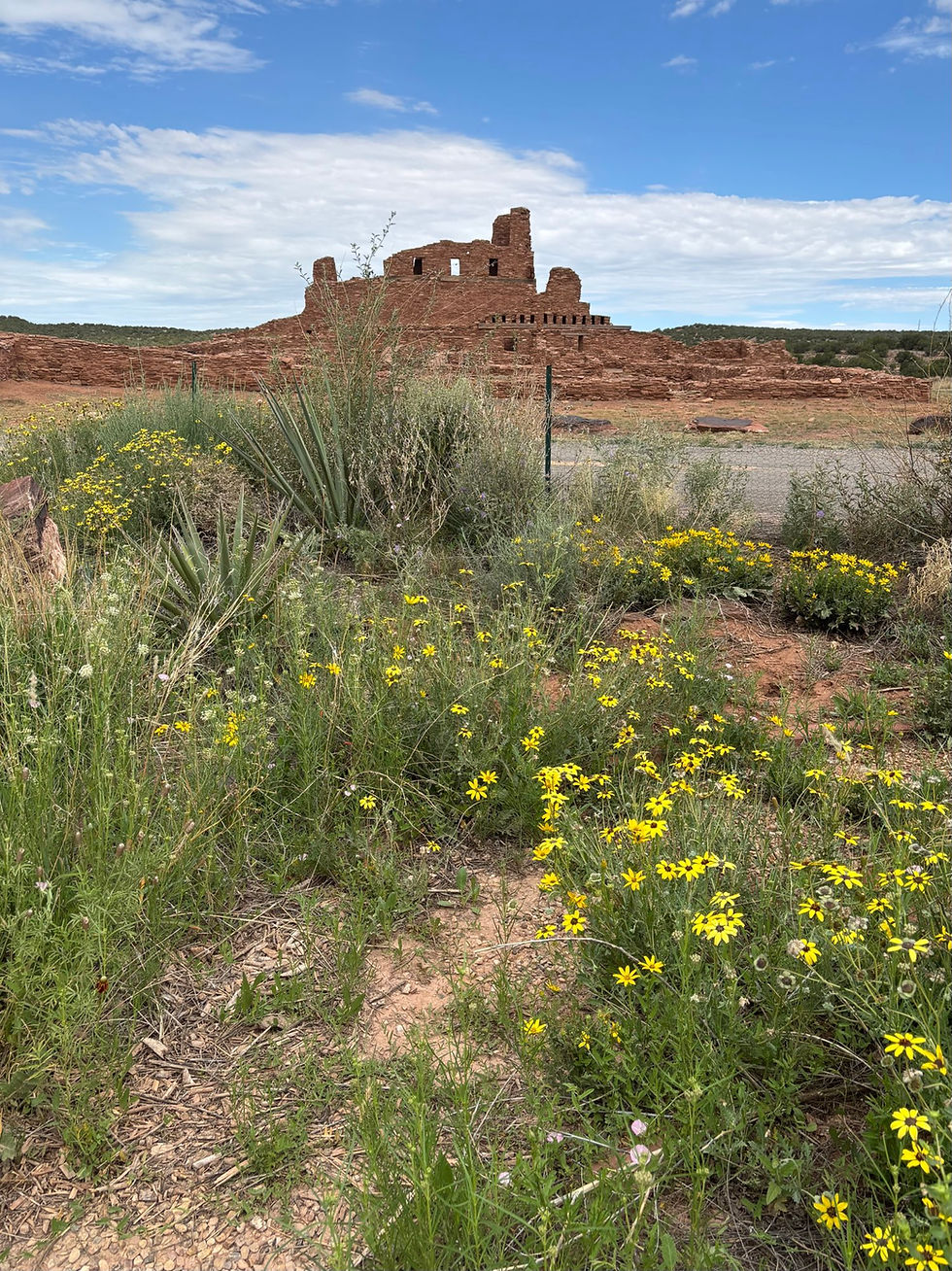
It’s early morning and the chocolate scent of the Southwest native wildflower Berlanderia lyrata greets me as I arrive at the Abó site of Pueblo Salinas Missions National Monument in central New Mexico, not far from the little town of Mountainair.

At the end of August I will be bringing the 6th Avenue Khadi Wala hand block printed cloth to a new (to me) community as an art vendor at the Mountainair Sunflower Festival.
I have been feeling a need to learn more about the area, to try to listen for ancestral voices of place, introduce myself and, in a manner of speaking, ask permission to land my canoe, bring my trade goods ashore on this very ancient trade route which is also, by some magical coincidence, (if magic and coincidence exist) geographically at the center point of the modern day state known as New Mexico.

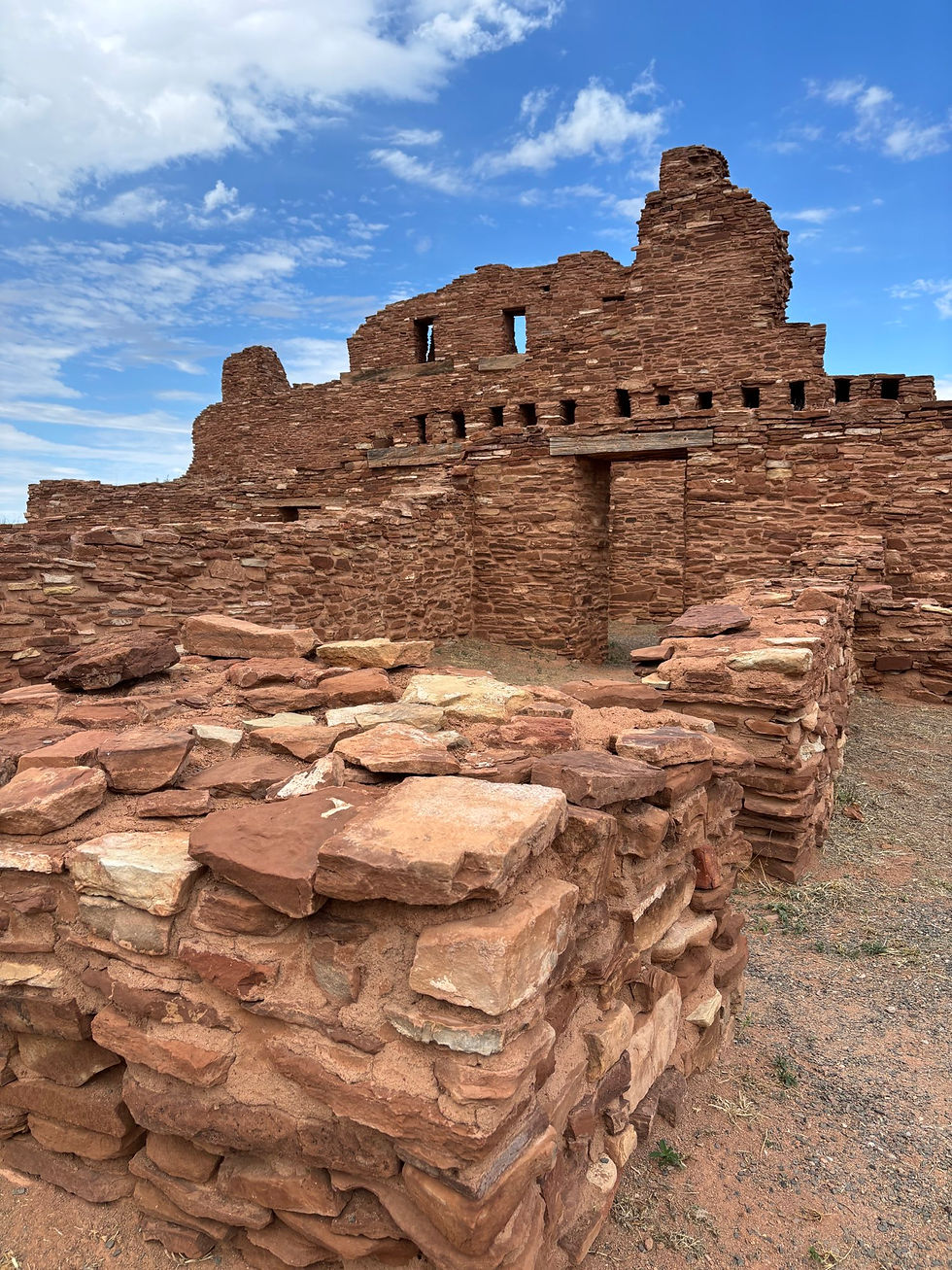
Vague mounds and rock piles are all that’s left today of the pueblo (village) which archaeologists theorize would have been the center of commerce in the area for many hundreds of years. Indigenous peoples from the Great Plains would probably have bartered for salt from nearby salt pans, corn, pottery and piñon nuts. From the 1600s we know the Spanish also shipped wagonloads of these goods south on the trade route between Mexico City and Santa Fe which came to be known as the Camino Real and in some parts The Old Spanish Trail.

A Franciscian friar stopped off and built a mission church alongside the trading center. The red Abó formation sandstone is ideal for masonry, chipping easily into rectangular blocks.

It seems that Spanish missionaries were quick to learn from puebloan people. The mission structures are very similar in construction style (perhaps defined by available materials) to ancestral puebloan sites found all over the region, perhaps most famously in the (fingers crossed) protected National Parks Service archaeological sites at Chaco Canyon, Aztec Ruins National Monument and Mesa Verde.

There even appears to be a kiva in the Catholic mission structure, dating from the same construction period as the church. Hmmmm.

As I am walking the very well signposted National Parks interpretive trail through the ruins of the mission, a cheerful bird call catches my attention: keree keree keree, chair chair chair chair, deedle deedle deedle deedle, tur tur tur tur, keree keree keree trrrrrrr. (as one ornithologist perfectly transcribed it)
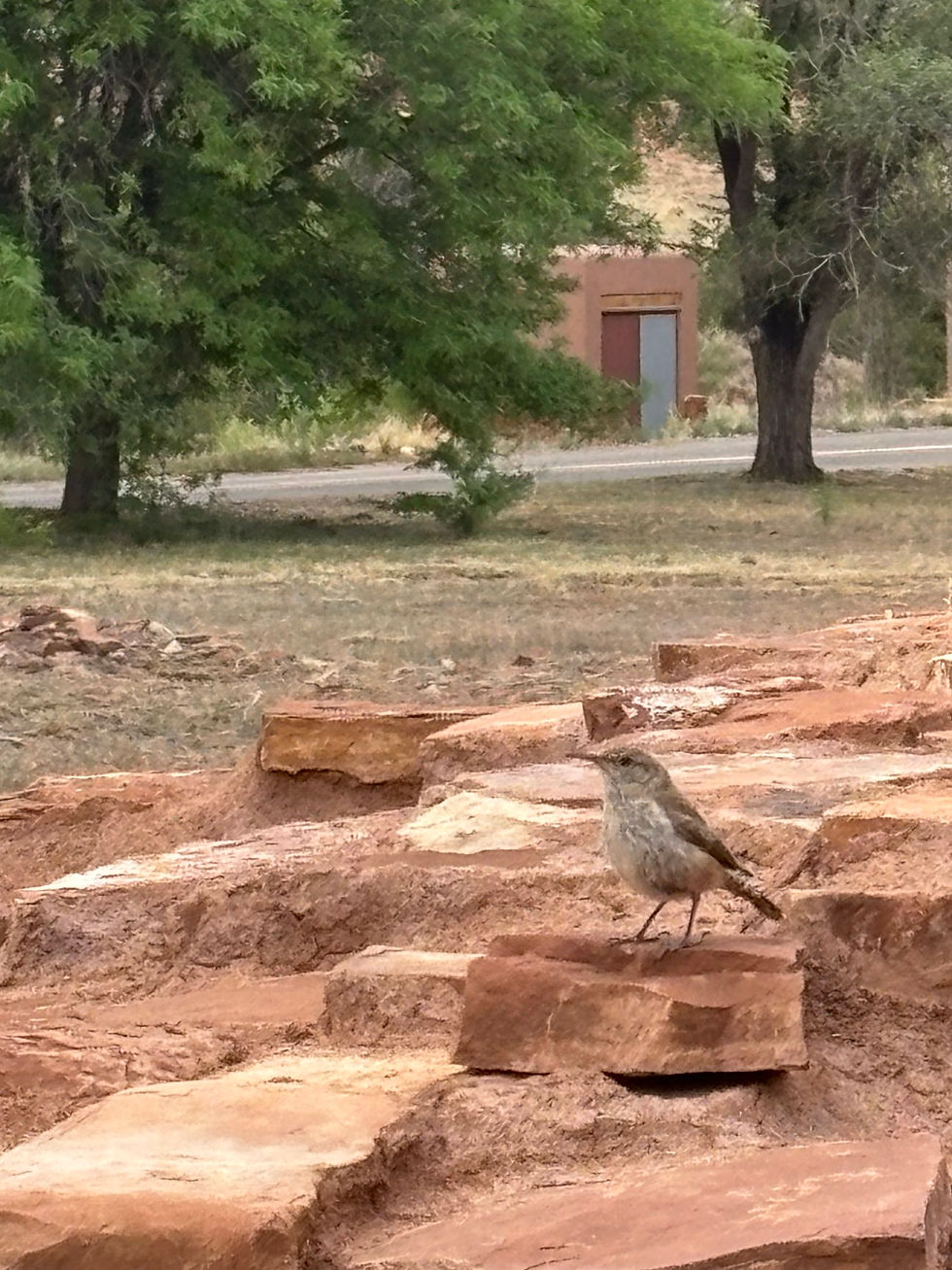
Mesmerized, I seek out the source. A Little Rock wren, hopping from rock to rock, draws me back to the kiva.

It seems to me he is saying: “Look!” Possibly, ornithologists with more science than me would say little bird is saying “Don’t look!” and drawing my attention away from a nest or brooding mate.

It happened repeatedly . I would turn away and continue on the trail through the ruins. keree keree keree, chair chair chair chair, deedle deedle deedle deedle, tur tur tur tur, keree keree keree trrrrrrr. Little Rock Wren would be beside me again, hopping around, leading back to the kiva.
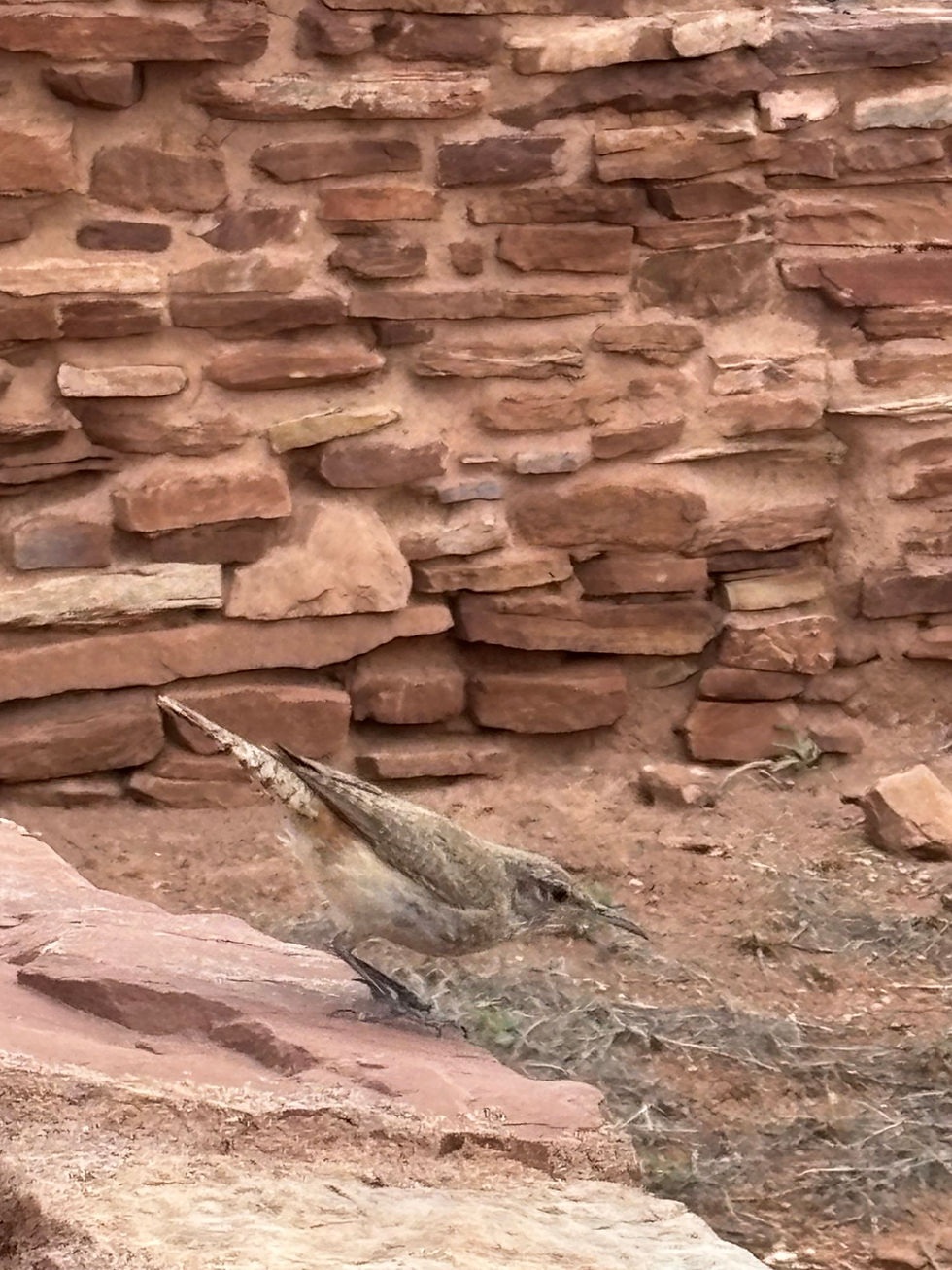
There was absolutely no other human around. I can only assume the insistent song/commands are meant for me. I obey Little Rock Wren. I spend some time at the kiva (or kiva-like structure) acknowledging presence. Being present. Being.

It sets me thinking about all that I have learned about kiva in my time in the past decade exploring and listening for ancestral voices of the Southwest. Looking for songlines. Kiva are, in brief, underground spaces used for social and spiritual ceremonies by ancestral puebloan peoples and their contemporary descendants.

Windows of awareness frame a landscape and a world view.

Looking down at my feet I find enormous ants teeming at the entrance to their own underground chamber, their own kiva. I have a Passage To India moment: even the wasps are holy… even the ferocious, big biting ants are holy…I dissolve. I become everything and nothing. It’s oceanic. I surf a wave….and I’m probably dehydrated with low blood sugar. Ant venom can’t be that strong, even these enormous enchanted ants.

Though it’s only mid morning, it’s growing dark. Storm clouds are gathering.

With the scent of rain on the air, I hasten now, thinking of the avocado sandwiches I packed for a picnic brunch in the cooler in the car, following the trail that goes behind the ruin of a centuries old Catholic Church, past the grave of a sheep farmer who somehow came to “own” this land in much more recent times, before it became (fingers crossed) a protected National Parks Monument.

The National Parks Service is doing a great job, as usual, of stewardship. Long may they continue to do so in this remote landscape way off the beaten track. Interpretive signs and trails, a visitor center and vault toilets and some picnic benches under shady trees make this a lovely place to visit. Even maybe a good place to feed the ghosts.

The sign in the windows at the historic Schaffer Hotel in Mountainair notwithstanding.

With a main visitor center in the town of Mountainair, there are three sites to the Salinas Pueblo Missions National Monument: Abó, Quarai and Gran Quivera, preserving the places where Spanish Franciscian friars established missions at three indigenous villages on an ancient trade route. A very long time ago.
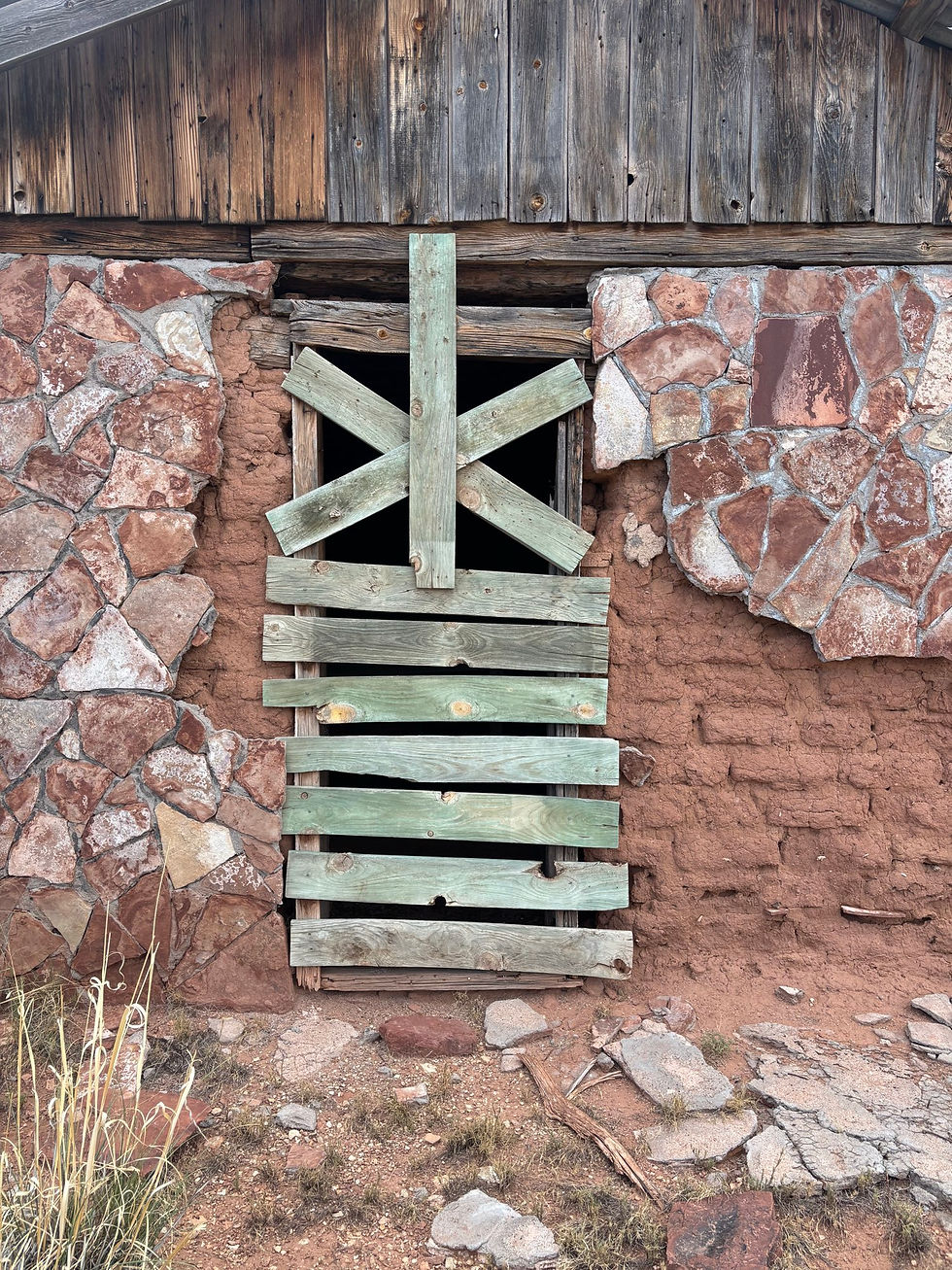
Trading continues. See you 29 th August (inshallah) at the Sunflower Festival.

Fingers crossed the ghosts have been well fed.
Recommended Reading
A Passage To India - E.M.Forster, 1924.
Set against the backdrop of the British Raj and the Indian Independence movement of the nineteen twenties, this now classic work is essentially a novel about difference, division and unity, the mundane and the profound, the pragmatic and feeling blind for the mystery at the heart of being human. It’s time to reread it, then (re)watch the 1984 David Lean movie.
Recommended Listening:
Van Morrison: Into the Mystic. 1970. Wherever you get your music.
(Or better yet, if you have time and inclination) listen to the entire Moondance album)
We were born before the wind
Also, younger than the sun
‘Ere the bonnie boat was won
As we sailed into the mystic
Hark now, hear the sailors cry
Smell the sea and feel the sky
Let your soul and spirit fly
Into the mystic
Yeah, when that fog horn blows
I will be coming home
Yeah, when that fog horn blows
I wanna hear it
I don't have to fear it
And I wanna rock your gypsy soul
Just like way back in the days of old
Then magnificently we will float
Into the mystic
When that fog horn blows
You know I will be coming home
Yeah, when that fog horn whistle blows
I gotta hear it
I don't have to fear it
And I wanna rock your gypsy soul
Just like way back in the days of old
And together we will float
Into the mystic
Come on, girl
Too late to stop now


Comments