
A dive into the agricultural gene pool

Updated: Apr 28
People forget that eating represents their most profound engagement with the natural world. Through agriculture is how we change the world, more than anything else we do. Michael Pollen in The Omnivore’s Dilemma

Agni (digestive fire) inhabits a little patch of garden on the southwestern boundary, under the (recently restrained and reshaped) mesquite tree. The stand of hulless black barley, Hordeum vulgare nudum (it’s not truly hulless, I am discovering) sowed late autumn, smoulders into ripeness, darkening while simultaneously radiating like glowing firelight. It’s a vision of golden stems bearing glistening black ears of pearly embers.
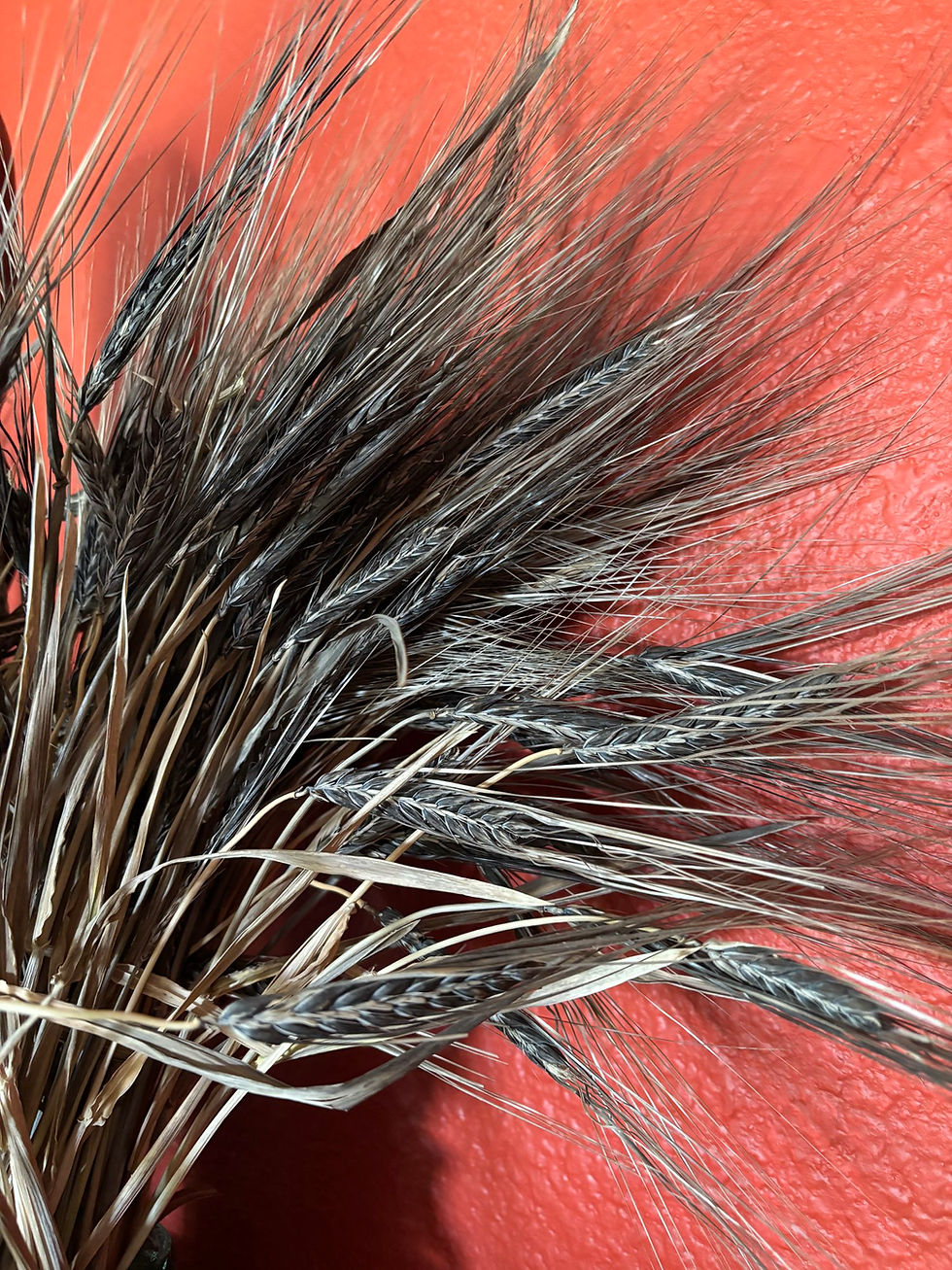
I think it might just be signalling harvest readiness. Final drying can be done inside in the cool stone and adobe interior of the shala safe from opportunistic, always hungry birds. I’ve been reading a lot about small scale grain growing recently, banking loads of theory in the aging brain, but when it comes to the minutiae of practice, I’m very much a novice. I fumble blindfolded every step of the way, feeling my way in a fog of ignorance, hoping for direction to come forth from the cloud of unknowing . This might just be the moment to close the books and webpages, and get out there with a scythe (or scissors in my case).

The cereal rye Secale cereale (sowed around New Year) dances and shimmers with little flowers. It’s my second season with this ancient food crop so there’s less fog but just as much delight.
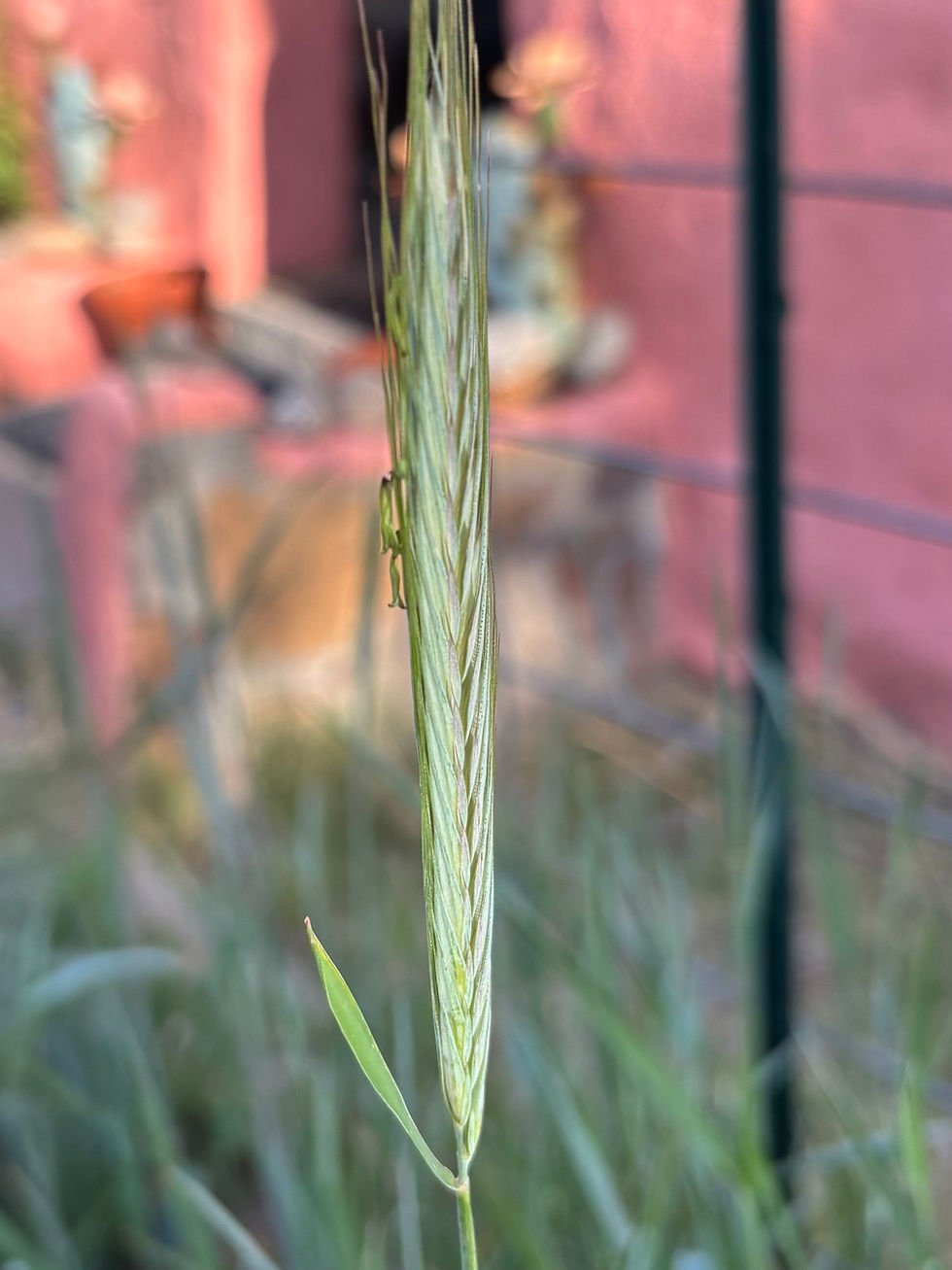
Last year’s harvest yielded just over a pound from a single bed (possibly 0.25 of a cup of seed) on the south facing front bedroom wall. This season I planted rye in that front area and the same again outback.

Fingers crossed I can improve on that 2025 pound of rye berries for lovely, robust grain bowls this year. No, I don’t plan on making any of it into whiskey or even bread. If the harvest is generous, I might grind some into flour for pancakes. To change things up and because maple syrup needs a platform. Drinking it straight from the jar is frowned upon.

With hand reaching for scythe to harvest barley, (is it or isn’t it ready)I paused, briefly, last week, to take a little road trip some 400 miles north, lured by promise of elusive, somewhat rare heritage purple Tibetan barley seeds and opportunity to learn useful stuff about grain growing from people who are passionate about the subject and have farms producing seed reputed to be of great integrity.

I pay an in person visit to Pueblo Seed & Food Company in far southwest Colorado.

There’s a storefront and restaurant which opens few days a week in Cortez, Colorado.
Coincidentally (or not as The Cloud of Unknowing might have it) Cortez is the little town where a decade ago I spent every Saturday for months doing a United States recognized Yoga Teacher training to comply with my employer’s liability requirements before I could offer free yoga classes in the public library I worked in at the time. I already had great and enlightened yoga teachers. I just needed a piece of paper to satisfy materialists in a litigious country. So I put in the time and got to know Cortez and the road there.

If I were 50 years younger I might look for a piece of land to steward in south west Colorado.

…O come with me my little one, we will find that farm
and grow us grass and apples there and keep all the animals warm.
And if by chance I wake at night and I ask you who I am,
O take me to the slaughterhouse, I will wait there with the lamb... Leonard Cohen extract from Stories of the Street (1967)

But I’m not 16 and starting out in life anymore (though sometimes one wonders) so these days I have to settle for drive-by glimpses of possibility. Of a road not taken. Of what might have been. While I wait in line at the slaughterhouse.

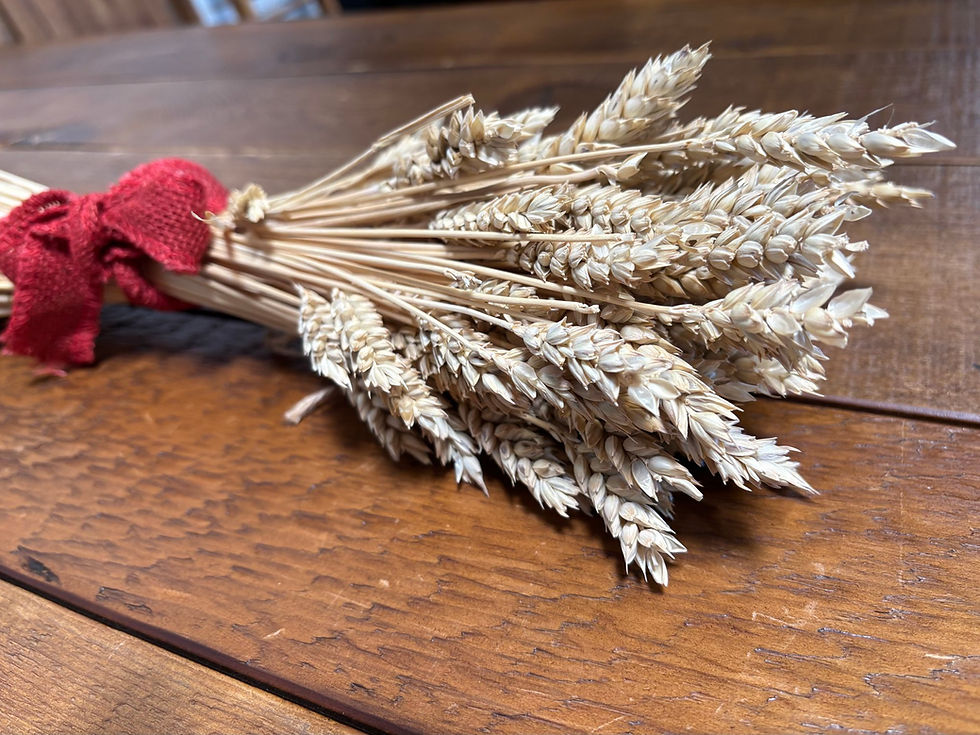
So I visit Pueblo Seed & Food Company in their storefront beautifully decorated, in a Scandinavian style, with grain art.

While I was actually there looking for the elusive purple Tibetan barley seed, and information on small grain growing, I also needed to eat.

I ordered a black bean burger on a rye bun with a small salad. From what I could work out, 99% of the ingredients for this delicious meal were locally grown. Even the pottery for the plate and salad bowl is made within a few miles of this seed and grain storefront and (part time) cafe. I was the only person eating this real food there on this day, at that time. Yet when I wandered out, I noticed lines of cars at the (at least three) nation wide fast junk food franchises which occupy the streets of downtown Cortez. Feeding the Mesa Verde tourists and locals alike with lab created food-like products. I felt so good, so sparkly and sustained by my meal I was sure it must show.

But obviously it didn’t. This o so beautiful space serving o such amazingly wholesome, tasty, real local, real food looked like this (above) at lunch time on a Friday in mid April - incidentally prime tourist season for the national parks in the Southwest.
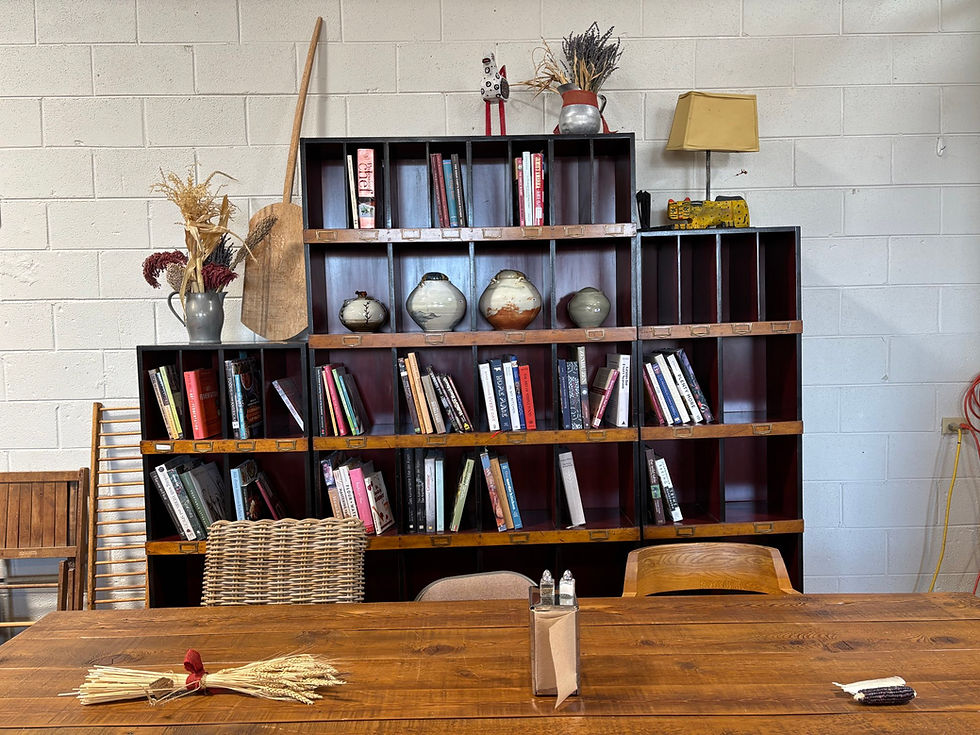
While it delighted my librarian heart that books were a significant part of the decor, I disappointingly did not find any new titles. I have already read or have already purchased (intending to read) all those titles most relevant to my small scale grain growing endeavors. There were no secrets to be imparted, beyond the realization that the librarian bibliographical research skills honed over 45 years, are transferable and still useful.

I bought many (too many) packets of seeds, a loaf of rye bread and several different packs of the most heavenly shortbread made variously with Pueblo Seed & Food blue cornflour and rye and wheat. The Scandinavian theme was continued in the anise flavor of the rye cookies.

“I’ve only just started growing grains. I don’t grow enough to make flours, have only used them in grain bowls” I say, admiring my hoard of Tibetan purple barley, sorghum and millet seed packs going into my shopping bag at the cash register.
“Oh you mean boooo-dah bowl - like with vegetables and stuff” interjects person waiting to pick up a loaf of bread behind me.
No, lady of the limited vocabulary and weird enunciation, I don’t mean boooo-dah bowl. I wouldn’t take the Buddha’s name in vain like that. I mean grain bowls.
Soapbox alert: WHY does every person in the US of Hay think I need linguistic retraining and re-educating on how to speak my mother tongue? Just recently, talking at my market booth about plans to introduce handprinted scatter cushion covers, someone butted in: “You mean throw pillows.” No, I don’t mean your term for it. I mean scatter cushions. Deal with it.
I grow really so weary of insidious cultural imperialism. One of the (many) advantages, the gift, the blessing (for which I am truly grateful) of growing up in one of the world’s most multi-lingual/ multicultural countries is the linguistically flexible ear.

Note: this blog post was meant to be published on Earth Day. I got behind myself. It’s been sitting unfinished in drafts. Here is a bonus Iris germanica picture of Coyote Ugly’s substitute, Mai Tai Join You, (hybridized by Schreiners, 2024) by way of apology.
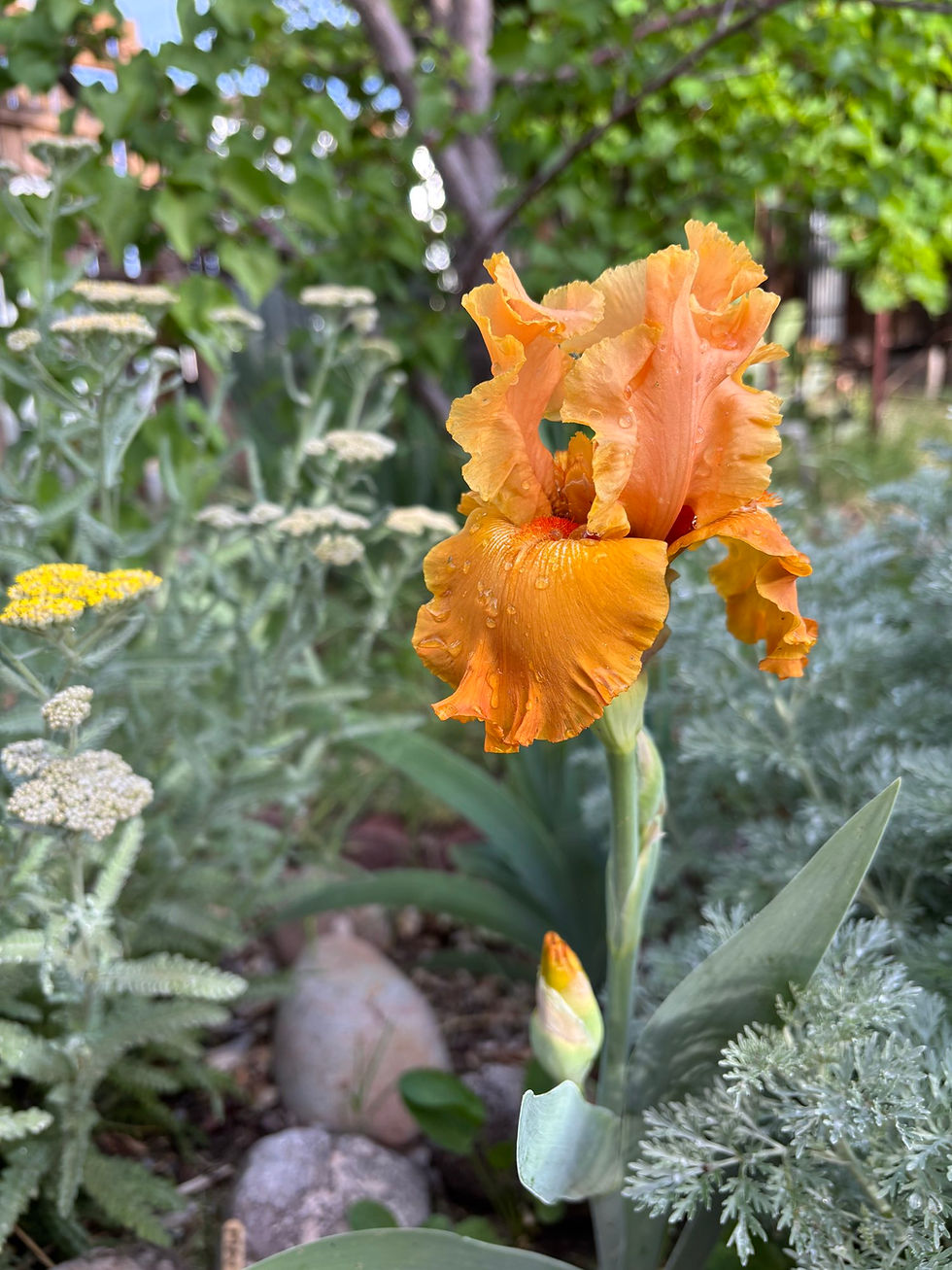
Isn’t she beautiful in her tawny peach and golden resplendence, even if the name is kinda awful? I shall secretly know her as Coyote Eyes. You can too. Water drops courtesy of garden hose. It doesn’t rain where I live. Ever.


Comments